Libraries 2026
StaticMaps
Server-rendered maps for pages that do not need to pan.
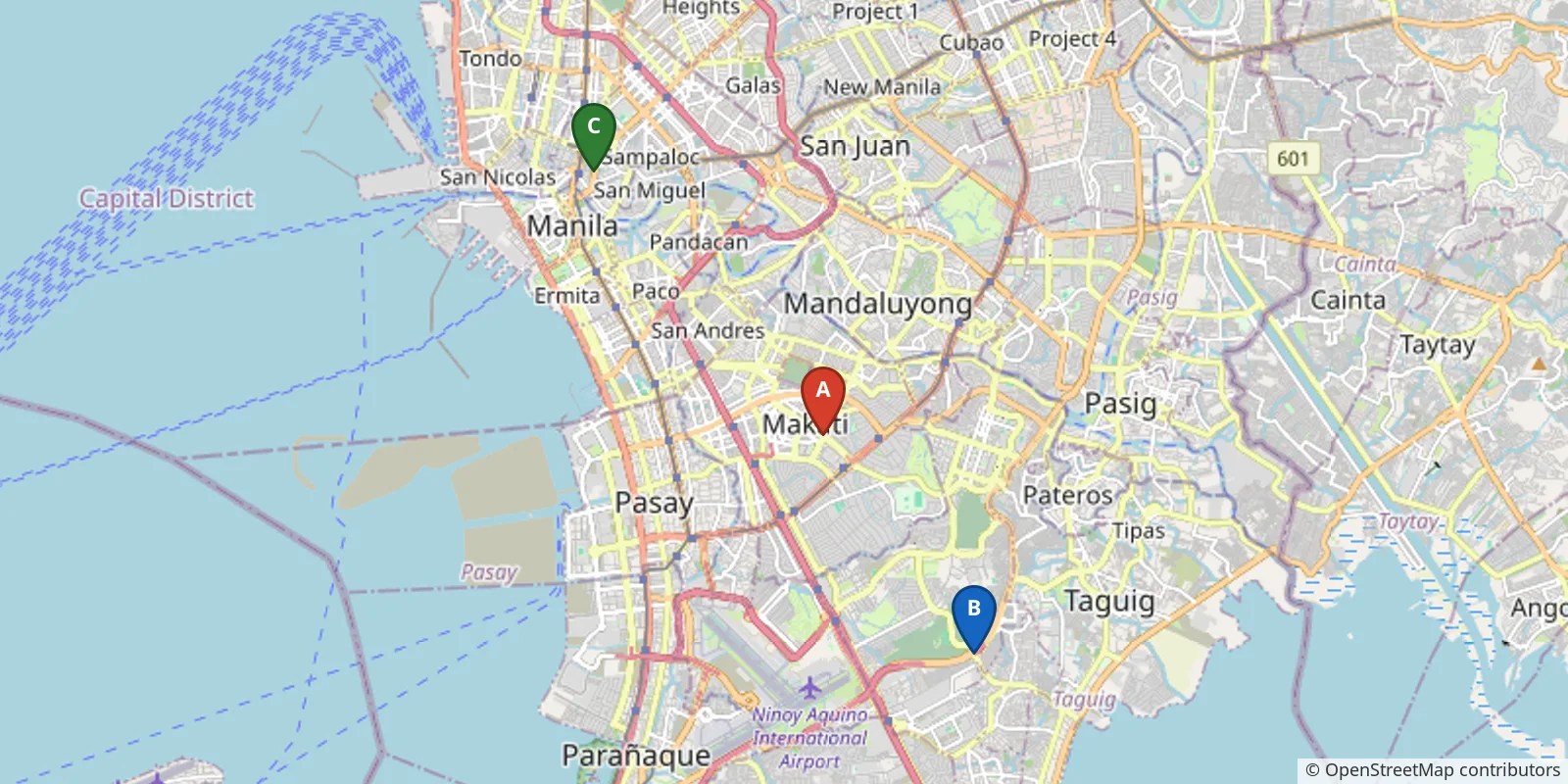
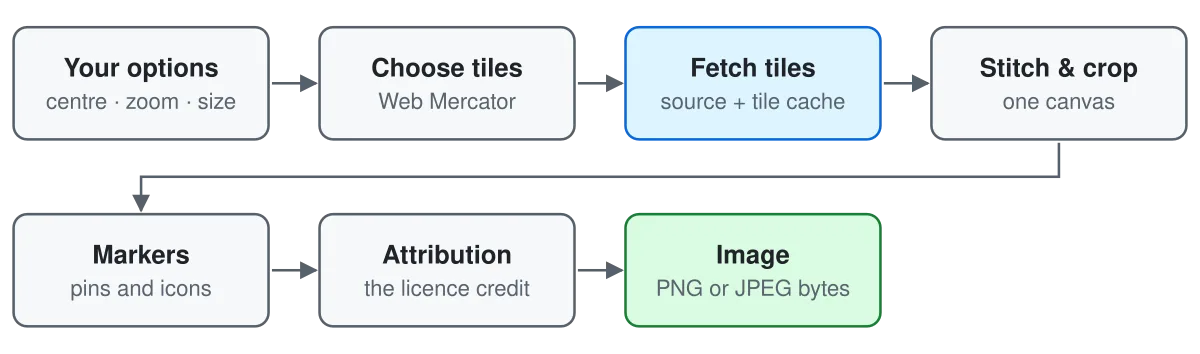
StaticMaps renders a map to an image on the server. Give it a centre, a zoom, and a size; it works out which tiles cover the view, fetches them, stitches and crops them, draws markers and attribution, and returns the bytes. The browser receives an <img>.
That constraint is the product. A map that never moves does not need a client-side map library, a tile cache in the browser, or a JavaScript bundle. One render produces one image that can be cached for as long as the content lives, and a page view costs no tile requests.
Tiles, fairly
StaticMaps sends an identifying User-Agent with every tile request, and the application supplies a contact URL. The attribution strip is drawn into the image using the fonts installed through fontconfig, which is why a slim container needs one installed. Those details are not decoration: OpenStreetMap’s tile servers are volunteer-run, and a server-side renderer is exactly the client that should behave.
Where it fits
Property listings, office addresses, a photo’s location, Open Graph images, and PDFs. Mosaic uses it for the map on a photo’s location; the map is rendered once and attached to the page like any other image.
Status
StaticMaps is published on Hex as staticmaps. The library renders and caches images; StaticMaps.Plug serves them over HTTP when an application needs an endpoint rather than a file.