Products 2026
Glaze
A light, native Spotify client for Linux, written in C3.
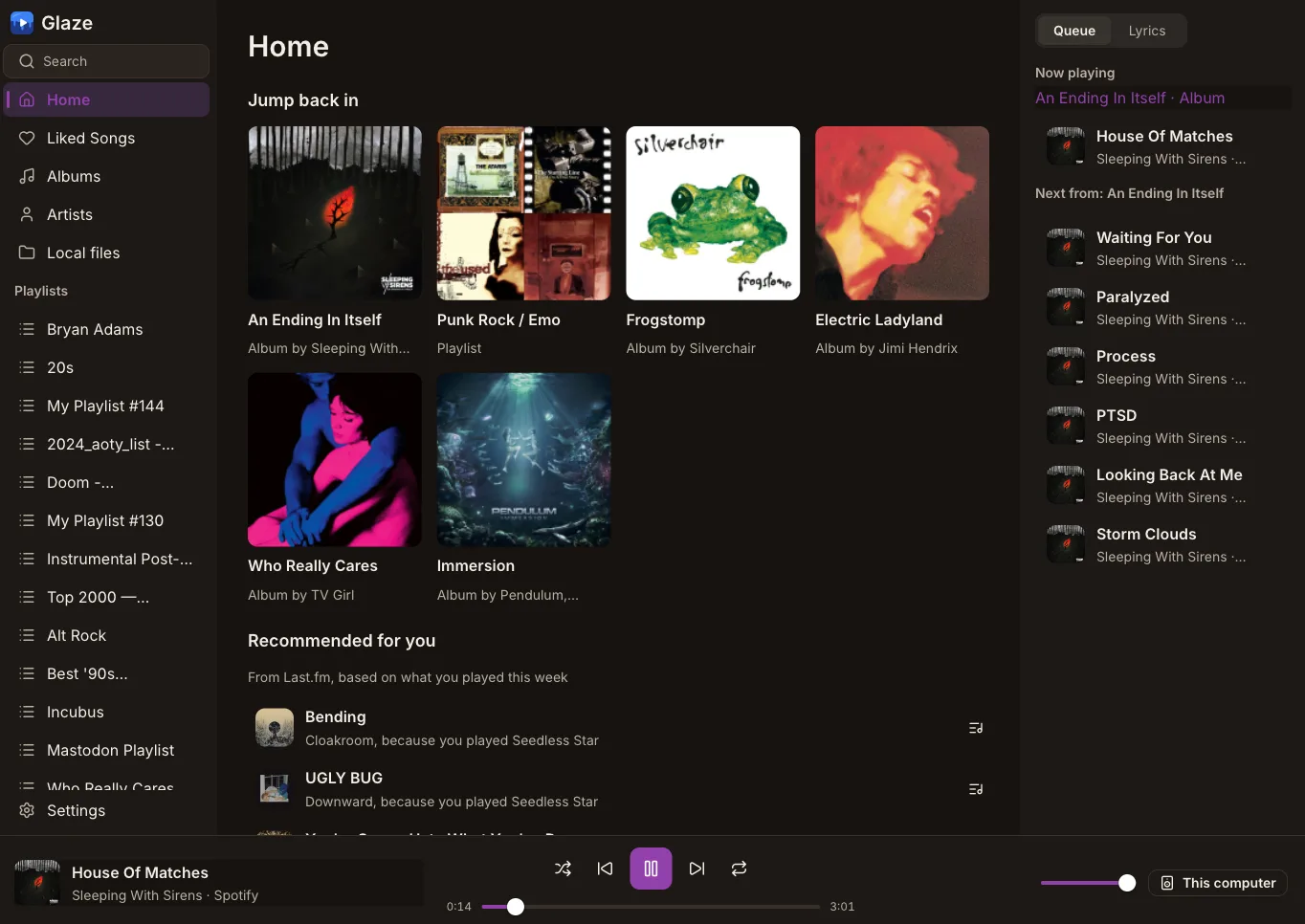
Glaze is a Spotify client for Linux that does the job and then stops. Play, browse, search, queue, lyrics, and discovery. It also plays your own music files. No spinning covers, no visualizers, no skins.
The screenshot above is the running application, not a design mock-up.
Why a native client
A browser-based client spends most of its memory on the browser. A native one can start in a fraction of the time, keep the queue and playback state in the same process as the UI, and integrate with the desktop like a real application. C3 makes that practical: a small binary, no garbage collector, and direct access to SDL3 and GStreamer.
The pieces
The UI is Kiln, a native component library drawn with SDL3 and laid out by Clay. Components own their spring motion and keyboard behaviour, so screens stay short and the app feels consistent without a design system bolted on top.
Spotify access lives in spotc3: Authorization Code with PKCE, a local callback server, automatic token refresh, and a save/load interface so sessions survive restarts. When Spotify’s six-month refresh limit expires, the library reports REAUTH_REQUIRED instead of retrying forever. Last.fm scrobbling goes through lastfmc3. Local files are played and tagged by gstc3.
Boring where it counts
The interesting problems are not in the drawing code. They are in the edges: rate limits that arrive as headers rather than errors, playback devices that appear and disappear, tokens that expire mid-request, and a queue that must stay consistent while the user edits it. Those paths are explicit in the client and in the libraries beneath it.
Status
Glaze builds, runs, and plays. Playback, browsing, search, the queue, lyrics, and local files work; the remaining work is tracked in the repository’s roadmap.