Products 2026
Bantay
Local-first home monitoring and automation that keeps working without a cloud.
Bantay is Filipino for “guard” or “watch”. It is a local-first home automation and monitoring system: a Raspberry Pi or small server on the local network, no cloud dependency, and a design that assumes the network is down more often than the vendor admits.
Safety before convenience
The system is built around leaks, smoke, power, and cameras. A leak sensor is not a notification; it is a trigger that can close the main valve, and a failed shutoff is an alert with a different urgency than a sensor going offline. The design notes treat monitoring and safety as first-class, ahead of scenes and schedules.
The core
The device registry and the runtime are the parts that exist: a state store, an event bus, and a command router. Devices are identified and their state is kept independently of any protocol; adapters translate between a protocol and that model. The design also covers replacing hardware without losing history, and a logbook that records causes rather than just events.
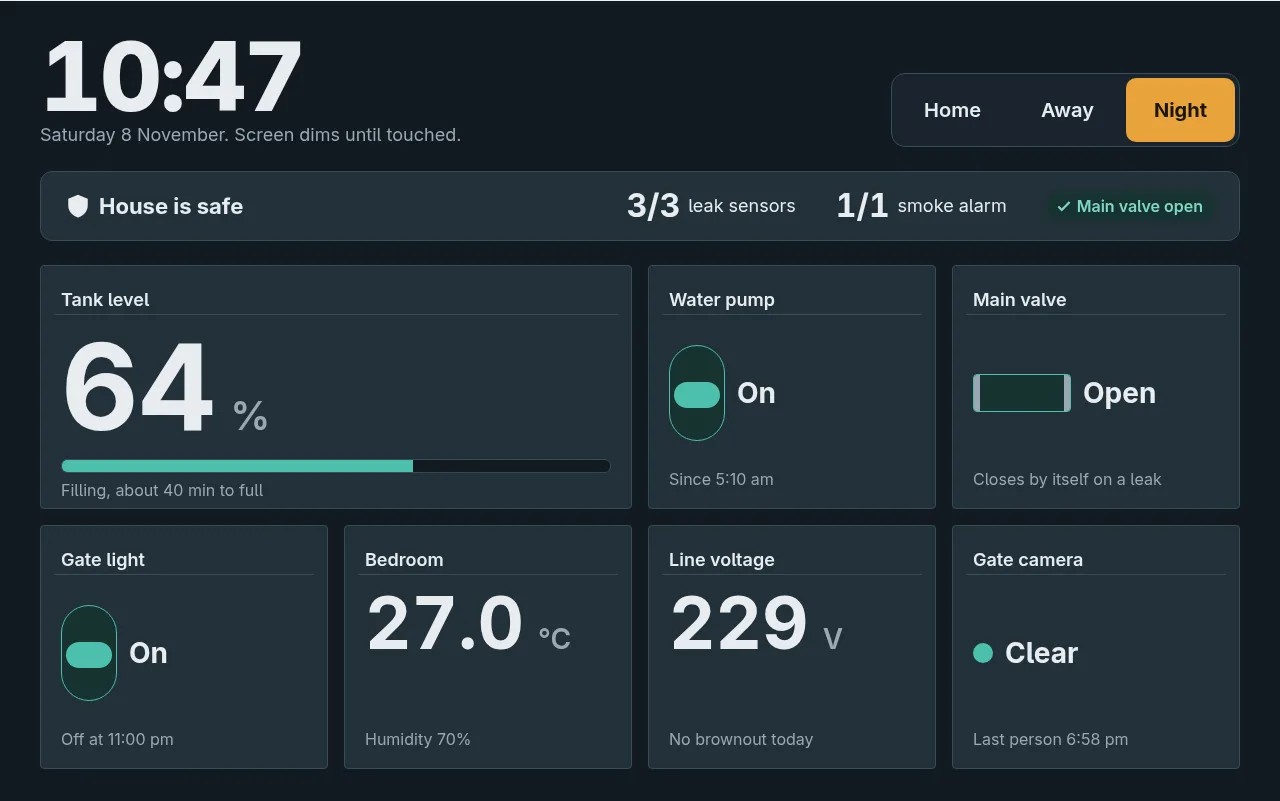
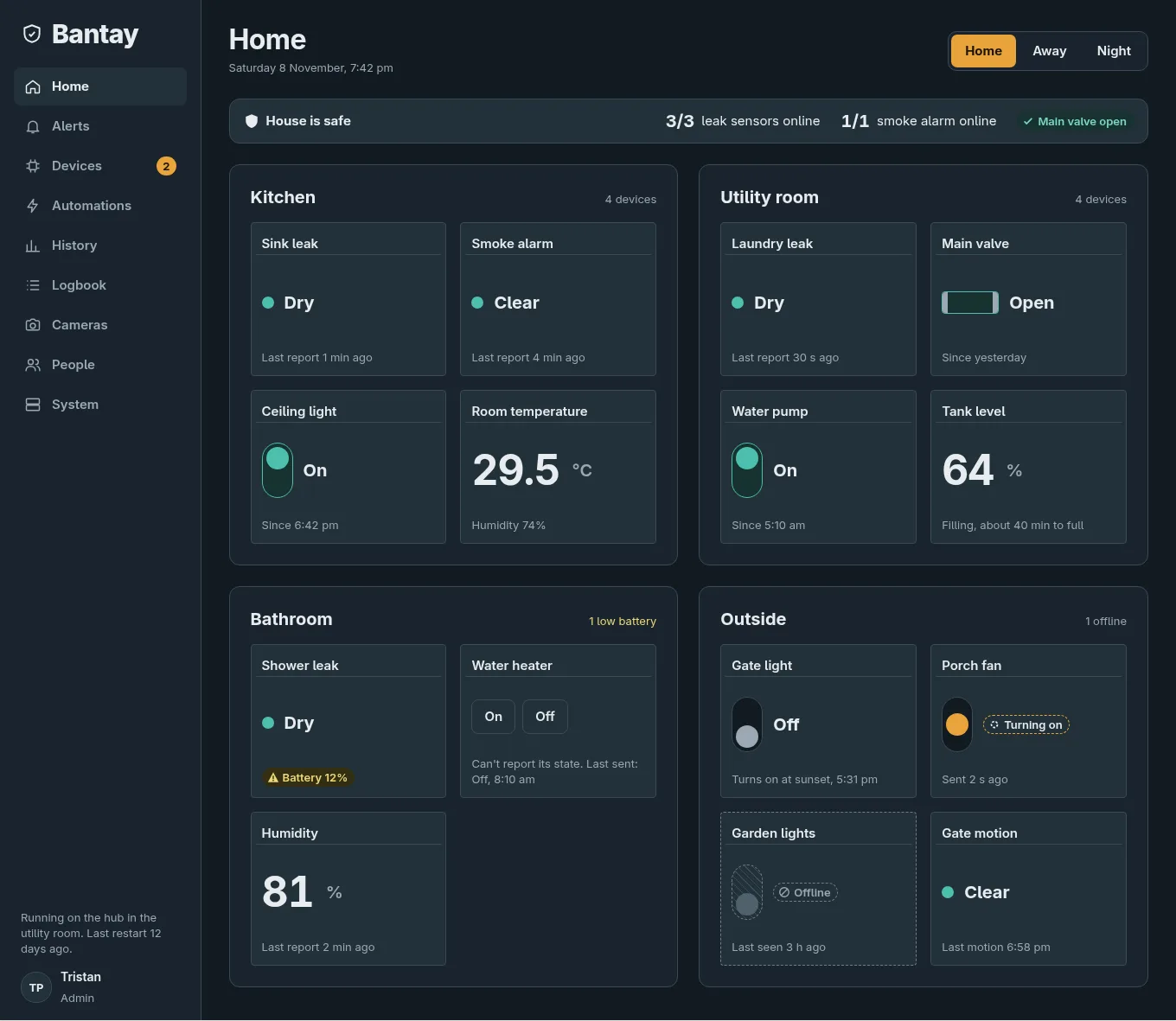
There is no protocol adapter or dashboard yet. The design set defines Home, Away, and Night modes; alerts; per-device history; automations and their last run; and the system issues page. The screenshots on this page are from that design work.
Why local first
A home that depends on a cloud account stops being a home when the account does. Local-first also makes the failure modes honest: the hub is either reachable or it is not, and the system can say which. The hardware target is a small always-on machine, not a rack.
Status
Early. The registry and core runtime run; protocol adapters, the dashboard, and the hardware integrations are still to come.